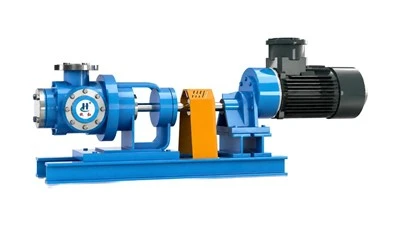
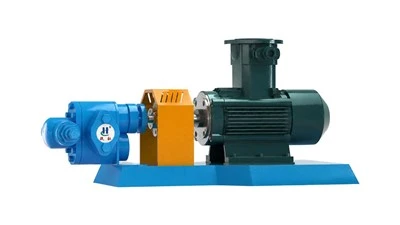
Cavitation is a persistent threat to horizontal chemical centrifugal pumps, and understanding net positive suction head (NPSH) is the key to preventing it. Cavitation occurs when the local pressure at the impeller inlet drops below the vapor pressure of the pumped liquid. Vapor bubbles form, travel into the higher-pressure regions of the impeller, and collapse violently. The collapse generates microjets and shock waves that erode impeller vanes, raise vibration and noise, and degrade hydraulic performance.
Two quantities govern cavitation risk. NPSH required (NPSHr) is a characteristic of the pump itself, determined by the impeller inlet geometry, rotational speed, and flow rate. It represents the minimum suction energy the pump needs to operate without significant cavitation. NPSH available (NPSHa) is a property of the system: the absolute pressure at the suction vessel surface, plus the static elevation difference between the liquid surface and the pump suction, minus the vapor pressure of the liquid, minus the friction losses in the suction piping. For reliable operation, NPSHa must exceed NPSHr by a margin-typically 0.5 to 1.0 meters, and more when the liquid is near its boiling point or the flow rate varies.
Horizontal chemical pumps face specific NPSH challenges. Because the pump is mounted at grade or on a foundation, it often draws from a tank or vessel whose liquid level is below the pump centerline. This creates a suction lift, which subtracts directly from NPSHa. Long suction lines with elbows, valves, and strainers add friction losses that further reduce available suction energy. Vertical pumps avoid these penalties by placing the suction inlet below the liquid surface, but horizontal pumps must compensate through careful system design.
Practical measures to improve NPSHa include increasing suction pipe diameter to reduce velocity and friction, minimizing the number of fittings, elevating the suction vessel, or subcooling the liquid to lower its vapor pressure. In some cases, a low-speed pump or a larger impeller eye can reduce NPSHr, though these changes may affect efficiency and head. Inducers-small axial-flow devices mounted ahead of the main impeller-can improve cavitation performance in high-energy pumps, though they add complexity.
Operators should recognize the symptoms of cavitation: a rattling or crackling noise from the pump casing, fluctuating discharge pressure, and vibration readings that rise unexpectedly. If cavitation is suspected, the first step is to verify that the suction valve is fully open, the suction strainer is clean, and the tank level is adequate. Persistent cavitation despite these checks indicates a system design deficiency that requires engineering evaluation rather than a simple field adjustment. Ignoring cavitation leads to impeller erosion, seal damage, and bearing failure-repairs that far exceed the cost of a proper suction system review.