


Vertical centrifugal pumps are widely used in various industrial and commercial applications due to their efficiency and reliability. However, these pumps are typically designed for above - ground operation. When there is a need to use a vertical centrifugal pump submersibly, several modifications are required to ensure its proper functioning and longevity. As a leading supplier of vertical centrifugal pumps, we have extensive experience in making these necessary adjustments.
1. Sealing Modifications
One of the most critical aspects of converting a vertical centrifugal pump for submersible use is the sealing system. In an above - ground application, the pump is not exposed to continuous submersion, so the standard seals may not be sufficient to prevent water ingress.
For the shaft seal, we often upgrade to mechanical seals specifically designed for submersible conditions. These seals are constructed with materials that can withstand the constant contact with water and the pressure exerted at depth. Tungsten carbide and silicon carbide are commonly used for the seal faces due to their high wear resistance and excellent chemical stability. Additionally, secondary seals are added to provide an extra layer of protection. These secondary seals act as a backup in case the primary mechanical seal fails, preventing water from entering the pump's internal components.
The casing of the pump also needs proper sealing. Gaskets made of rubber or elastomeric materials are used to seal the joints between different pump parts. These gaskets must be carefully selected to ensure they can maintain their integrity under water pressure and resist degradation from chemicals and contaminants present in the water.
2. Motor Protection
The motor of a vertical centrifugal pump is a crucial component, and when used submersibly, it is exposed to a more challenging environment. To protect the motor, we make several modifications.
First, we use a waterproof motor enclosure. This enclosure is designed to prevent water from entering the motor housing. It is typically made of a corrosion - resistant material such as stainless steel or fiberglass. The enclosure is also sealed tightly to ensure that no water can seep in through the seams or openings.
Secondly, we install a thermal protection system. Submersible motors are more prone to overheating due to the limited heat dissipation in the water environment. The thermal protection system monitors the motor's temperature and automatically shuts off the motor if it reaches a critical temperature. This helps prevent damage to the motor windings and other internal components.
In addition, we use oil - filled motors in some cases. The oil in the motor serves as a coolant and lubricant. It helps to dissipate heat from the motor windings and also provides a barrier against water ingress. The oil is carefully selected to have the appropriate viscosity and chemical properties to ensure optimal performance.
3. Impeller and Casing Design
The impeller and casing of the pump need to be optimized for submersible operation. When a pump is used submersibly, it is often required to handle different flow rates and pressures compared to above - ground applications.

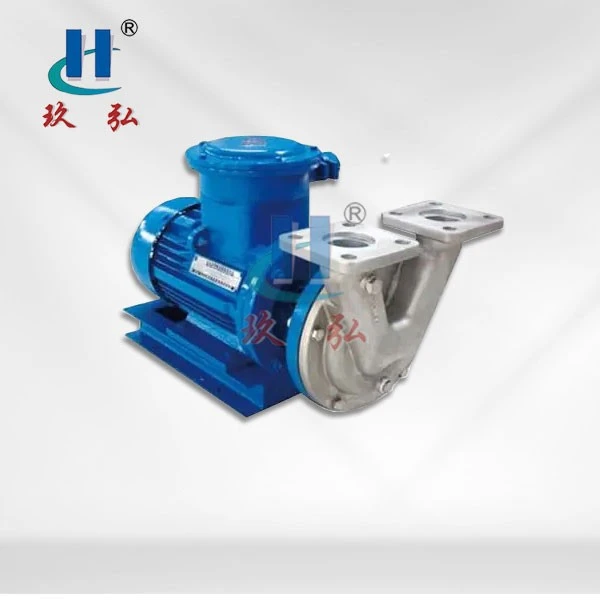
The impeller design may be modified to improve its hydraulic efficiency under submersible conditions. We may increase the blade angle or change the impeller diameter to match the specific requirements of the submersible application. This helps to ensure that the pump can deliver the required flow rate and head while operating efficiently.
The casing of the pump also needs to be designed to withstand the external pressure exerted by the water. It may be reinforced with additional ribs or thicker walls to prevent deformation. The casing's internal surface finish is also important, as a smooth surface can reduce friction and improve the pump's overall efficiency.
4. Cable and Electrical Connections
The cables and electrical connections of the pump are another area that requires attention when converting a vertical centrifugal pump for submersible use.
We use waterproof cables that are specifically designed for submersible applications. These cables are insulated with materials that can resist water penetration and electrical breakdown. The insulation is typically made of materials such as polyethylene or cross - linked polyethylene, which have excellent water - resistant properties.
The electrical connections between the cables and the pump's motor are also sealed to prevent water from entering. We use special connectors that are designed to provide a watertight seal. These connectors are often filled with a potting compound to ensure that no water can reach the electrical contacts.
5. Cooling System
In an above - ground vertical centrifugal pump, the motor is usually cooled by air circulation. However, when the pump is used submersibly, a different cooling system is required.
We often use a water - cooled system for submersible pumps. The water surrounding the pump is used as a coolant. The pump is designed with channels or passages that allow the water to flow around the motor and other heat - generating components. This helps to transfer the heat from the motor to the surrounding water, keeping the motor at a safe operating temperature.
Comparison with Other Types of Pumps
It is worth comparing the submersible vertical centrifugal pump with other types of pumps, such as the Single Stage Centrifugal Pump, Double Suction Pump, and Vertical Multistage Centrifugal Pump.
A single - stage centrifugal pump is relatively simple in design and is suitable for applications with low to moderate head requirements. However, when used submersibly, it may require similar sealing and motor protection modifications as a vertical centrifugal pump. The main difference lies in the impeller design, which is typically simpler in a single - stage pump.
A double - suction pump is designed to handle large flow rates. When converting it for submersible use, the same principles of sealing, motor protection, and cooling apply. However, due to its larger size and more complex design, the modifications may be more challenging and require more careful engineering.
A vertical multistage centrifugal pump is used for applications that require high head. When used submersibly, in addition to the standard modifications, the multistage design may require additional attention to ensure that the pressure distribution between different stages is balanced.
Conclusion
Converting a vertical centrifugal pump for submersible use requires a comprehensive set of modifications to ensure its reliable and efficient operation. These modifications include sealing improvements, motor protection, impeller and casing design optimization, cable and electrical connection enhancements, and the implementation of a suitable cooling system.
As a supplier of vertical centrifugal pumps, we have the expertise and experience to carry out these modifications to meet the specific needs of our customers. Whether you need a pump for industrial wastewater treatment, water supply in deep wells, or any other submersible application, we can provide you with a customized solution.
If you are interested in our submersible vertical centrifugal pumps or have any questions about the modifications required, please feel free to contact us for further discussion and procurement negotiation. We are committed to providing you with high - quality pumps and excellent after - sales service.
References
- Karassik, I. J., Messina, J. P., Cooper, P. T., & Heald, C. C. (2008). Pump Handbook. McGraw - Hill.
- Stepanoff, A. J. (1957). Centrifugal and Axial Flow Pumps: Theory, Design, and Application. Wiley.


